
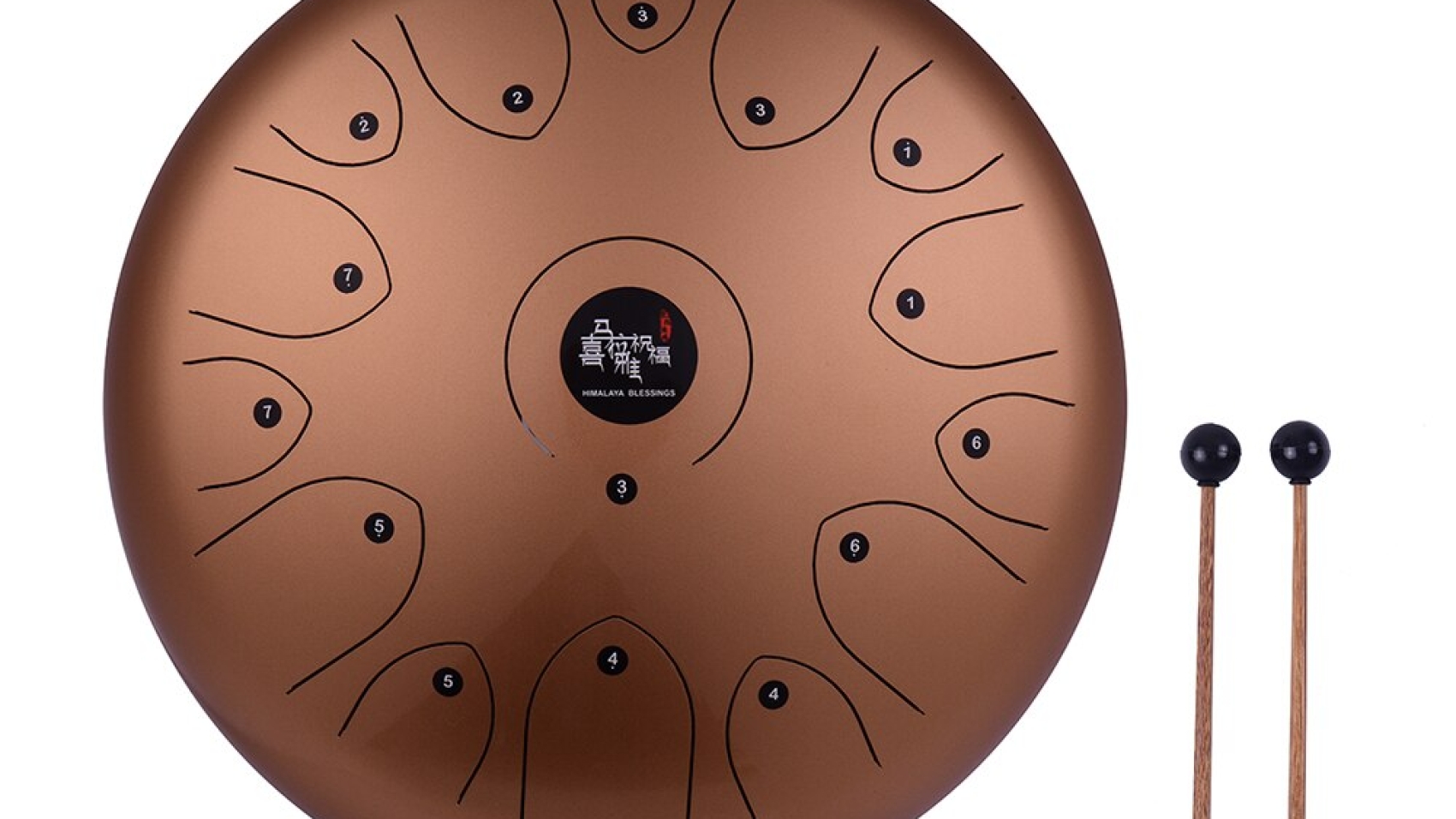
Handpans are relatively new instruments that captivate listeners with their otherworldly, enchanting sound. Not only is their sound intriguing, but their appearance is also quite captivating. They resemble small UFOs, medieval shields, or even steel turtle shells.
Handpans are gaining popularity every day, but as a relatively new instrument, many people are still unfamiliar with the name or have never seen one played live. Even among those acquainted with the instrument, there’s confusion, as people often refer to it by different names.
However, in recent years, as the world of handpans has become more popular, certain terms have solidified, making it easier to discuss them accurately.
What’s the difference between a pantam and a hang drum?
There is no actual difference between a handpan, hang drum, pantam, steel tongue drum, or Space Drum. These are all names people have used in the past to refer to the instrument now more commonly known as a handpan. In Europe and the Americas, it’s often called a pantam, while in Israel and the Middle East, it’s referred to as a pantam.
Handpans are melodic percussion instruments made of steel, belonging to the idiophone family. While the official name is now handpan, for the past 20 years, people have coined various names, some of which can be confusing.
Additionally, people often mix up the names Hang and Hang Drum. The name Hang originated from the Swiss brand PANart and was the first handpan ever created. Similarly, Hang Drum is an incorrect term that people coined by combining the name of the first handpan, Hang, with the word drum, due to the instrument’s drum-like appearance and sound.
A History of the Handpan
The handpan is a steel percussion instrument that was first created by PanArt in Switzerland in 2000. They decided to name the instrument “Hang,” which means “hand” in Swiss German.
The Swiss couple Felix Rohner and Sabina Schärer were inspired by Caribbean steel drums and created the Hang by inverting them, adding a bottom shell, and modifying them to be played by hand rather than with sticks.
The instrument they first created had a lenticular shape with two hemispherical steel shells joined together. It resembled a small UFO, a steel turtle shell, or a medieval shield.
The most amazing thing about the instrument, aside from its design, was its sound. The sound was so powerful, soothing, and ethereal that it transported listeners to magical places.
Hang instruments also boasted remarkable percussive qualities, merging melody and the percussive world into one mesmerizing instrument.
When the first batch of handpans was produced, the quantity was limited and sold only to select individuals.
The Early Days of the Handpan
In the early days, there were a limited number of Hang players, consisting mainly of buskers and travelers who were showcasing and introducing the instrument to the general public, particularly in Europe and the United States.
Since the instrument was unknown, people were unsure of its name. Given its resemblance to a drum in both appearance and sound, most people adopted the name “Hang Drum,” which became more popular than the original name “Hang” thanks to YouTube and social media videos.
Later, during the 2010s, other manufacturers began producing these instruments and gave their creations different names. Thus, new names like pantam, space drum, and sound sculptures entered the scene. As it gained popularity both on the streets and online, people who didn’t know what to call these new drums constantly introduced new terms: hand drums, hand percussion, steel drums, metal drums, tank drums, and so on.
Eventually, a common and recognized name for the instruments was established: handpan. Since the instruments were played by hand and resembled a pan, the name “handpan” became widely adopted.
In Israel and Middle Eastern countries like Iran, the term “pantam” is commonly used instead of handpan, and it is also an accepted name.
In other words, handpan and pantam are generic terms like “guitar,” while Hang and Space Drum refer to specific instruments from particular brands. So, we can say that Hang is to handpans what Fender is to guitars. It refers only to specific guitars from a particular brand.
Handpan vs. Hang Drum: Which is Right for You?
Given that Hangs were the first instruments and their numbers are very limited, they are sold at very high prices due to their nostalgic value.
However, today’s handpans are produced with better techniques and can play a wider range of notes. The materials and overall sound quality are significantly better than the Hang. Handpans can be made from stainless steel, quenched steel, or nitrided steel in various sizes.
Moreover, there are countless scale options and customization choices. You can order from hundreds of different makers.
In contrast, Hangs are older instruments that you can only find on the second-hand market. They have only 7-9 notes, scale choices are limited, material choices are solely nitrided steel, and the acoustics are poorer than modern handpans.
However, due to their collectible status and nostalgia factor, they are sold at very high prices, starting at $5,000 and going up to $15,000.
If you don’t have a lot of money and aren’t a collector, I highly recommend starting with a modern handpan.